

3D scan and point clouds
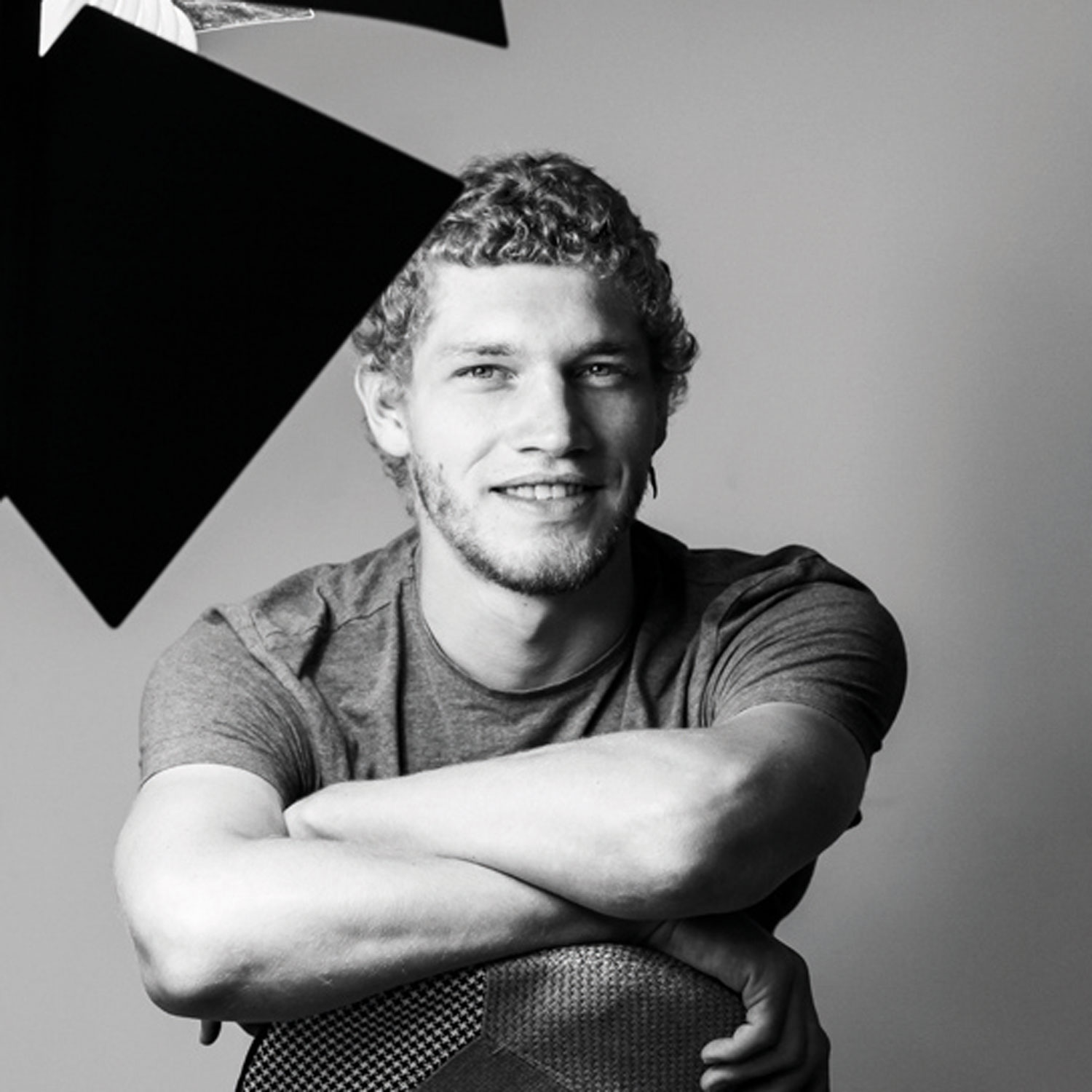
Valentin Goham, BSc. has been part of SNOW ARCHITEKTUR since the beginning of 2019. His expertise lies particularly in inventory and processing. After the initiation of laser scanning in May 2020, inventory planning has changed fundamentally. The laser scanner has become an essential tool for as-built surveys. In this interview, he explains the advantages of working with the 3D scanner, how he works with it and how project development benefits from the new technology.
Valentin Goham | Project management inventory planning
How does the laser scanner work and what are point clouds?
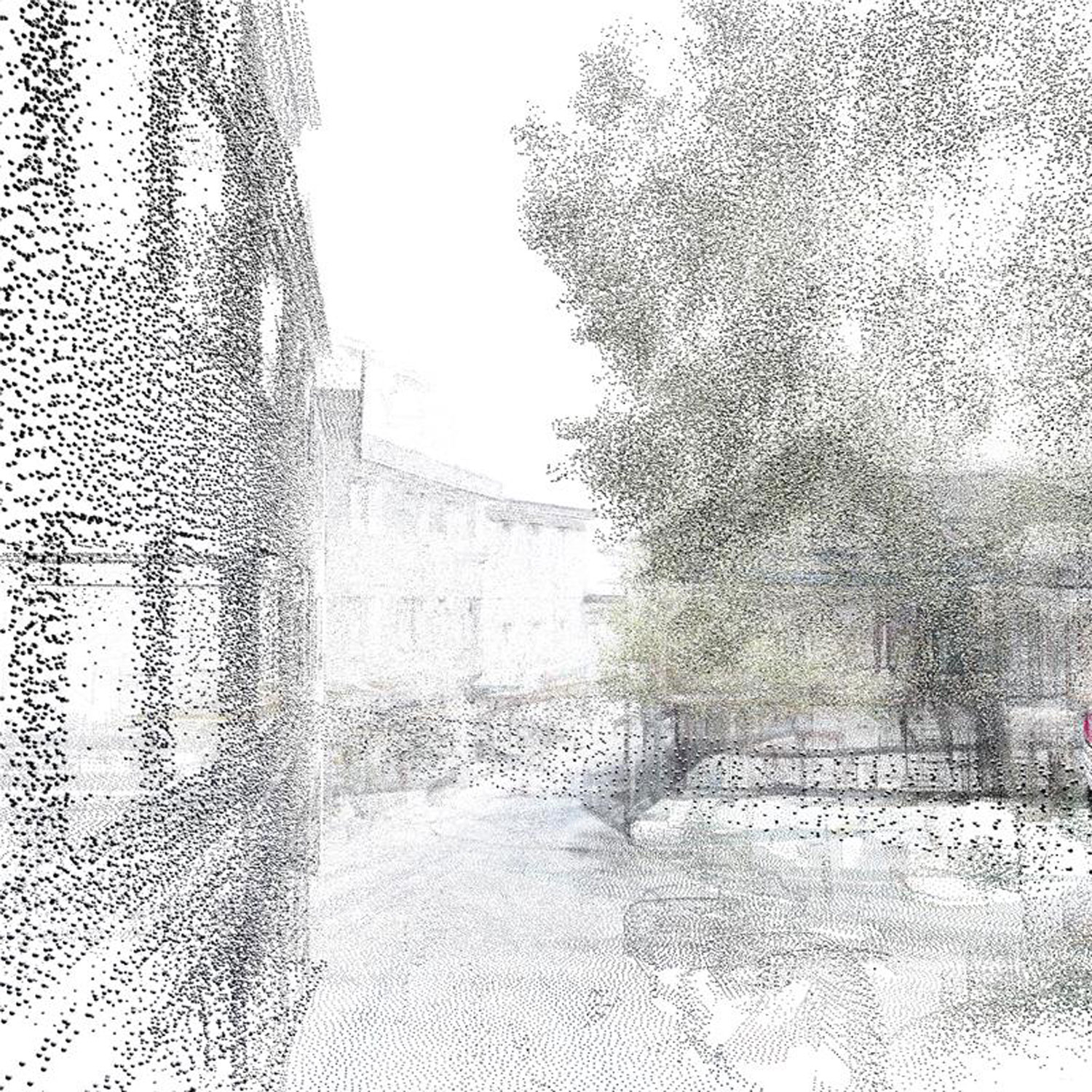
Valentin: Starting from the center of a room, the 3D scanner scans the surroundings and measures the distances to the nearest solid material. In this way, it creates a three-dimensional image of everything that is visible. Our device measures up to 360,000 points per second - this results in the so-called point cloud. By way of comparison, we measure around 3 points per minute by hand. The point clouds of the different rooms are linked together on the tablet on site. This creates a very precise 3D model of the object within a very short time; more precisely, a digital copy. The 3D scanner can also take a color dome photo with a high dynamic range (HDR) of the surroundings.
When did you switch to 3D scanning and how did you work before?
Valentin: The starting signal for this was given in May 2020. Originally, the aim was to switch the office's working methods to intelligent 3D drawings. In this context, it made sense to start with the as-built survey and carry it out directly in three dimensions.
Before we had the 3D scanner, we measured manually. This means that we measured individual rooms by hand using a laser distance measuring device. The angles and heights were then constructed based on the measured lengths and diagonals. This could often lead to inaccuracies, especially in older buildings, and was very time-consuming. In addition, manual measuring always required another person to sketch the measurements in parallel. Essentially, efficiency and accuracy have improved considerably, making the problems mentioned above obsolete.
For which construction projects is the 3D scanner used at SNOW ARCHITEKTUR?
Valentin: We use the laser scanner for all types of existing buildings. In other words, for all conversions, extensions and additions. In other words, as soon as any kind of building fabric is present. The 3D scanner is also used for residential conversions, as it allows us to derive a very precise actual condition of the property.
Trade submissions are also a current topic with which customers approach us. This involves the digitization of entire factories. These as-built plans, which are required for certain permits, can be efficiently recorded with the scanner.
In the future, laser scanning will also become increasingly interesting for construction site documentation, for example to create a detailed pipe plan before cladding the walls or installing the floor structure. This will provide better data on the construction measures in the future, in the event of a conversion. The scanner's photo function is also very useful here. Distances can also be measured and checked in the associated software.
In which situations is the 3D scanner particularly helpful?
Valentin: The technology is particularly interesting in the context of listed buildings and buildings with old vaults. Here there are often sloping walls and crooked angles that are difficult to measure by hand.
It is also not uncommon for room heights to vary. A large number of measuring points are therefore required to precisely map these level changes in the program. And this is where the laser scanner shines with its scanning performance of up to 360,000 points per second. As already mentioned, a manual measurement is much more time-consuming.
There are also complex projects that we would not have been able to take on without the 3D scanner. Due to their architecture with complex building structures and vaults, it would not have been possible to measure them by hand with the required accuracy or this required accuracy would have been associated with a high workload and correspondingly high and uneconomical costs.
What are the specific advantages of the new scanning technology - also for customers?
Valentin: Thanks to the increased efficiency and accuracy, it is possible to complete the measurement much faster. In most cases, you are finished within a day; for small houses, it only takes half a day. In the past, several appointments often had to be made. Of course, this is ultimately reflected in the price for our customers. The entire measuring process was also much more complicated before: furniture had to be moved and curtains taken down to get the right measurements. And the whole process always involved two people. This is hardly necessary now, as the point cloud makes it possible to see exactly which object is "in the way" and in most cases it is still possible to determine the edge behind it. It is therefore much more convenient for residents, especially when renovating houses and apartments, as it causes virtually no inconvenience.
In summary, it can be said that the 3D scanner not only makes our work easier compared to manual measurements, but also that the process is developing dynamically and is therefore constantly opening up new areas and helping us to work much more precisely and efficiently. This is particularly pleasing, as we not only want to be open in the creation of architecture, but also in terms of personal and technical development.