

Tasks of architecture.
Dipl.Ing. Mario Toferer in conversation: Insights into the mind of an architect.
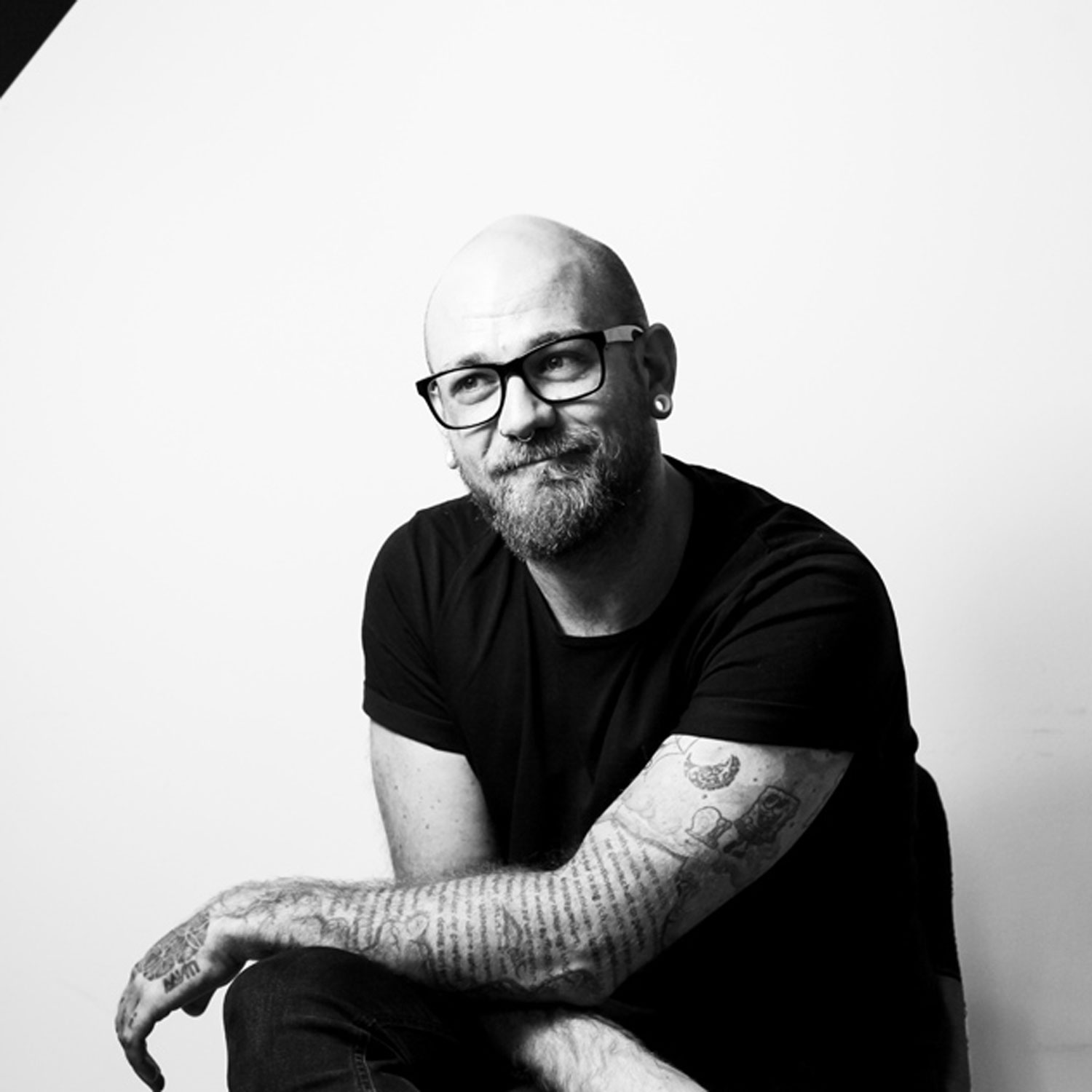
For this blog, we spoke to our project manager Mario Toferer about what he sees as the role of architecture and what emotional levels of meaning are involved.
What are the tasks of architecture?
Mario: This question is not easy for me to answer. I am a great friend of Hans Hollein's statement or creative approach "Everything is architecture".
In my opinion, architecture has many tasks to "fulfill" - the most original of these tasks is perhaps reflected here in Vitruvius' concept of the "primitive hut". A very down-to-earth construction made of the simplest building materials available in the vicinity, which mainly served as protection from wind and weather. Modern architecture emerged from this concept, as a basis and foundation, so to speak.
Now these two approaches are very close to each other - if you consider that Hollein also extended his design to furniture and door handles, among other things - so he always had the big picture in mind.
What do these two theories mean in context? A holistic, all-encompassing narrative is needed, which must be reflected in every design in order to do justice to the social, ecological and mental responsibility that architecture has.
How do these architectural tasks relate to emotional levels of meaning?
Mario: The question of what emotional significance architecture can have is a very personal and individual journey. Several parameters come together here, and it is important that they are in balance so that one part does not predominate and thus possibly have a negative emotional impact. These parameters include the positioning of the building object, the materials used, the feel and the lighting, to name just a few examples. It is comparable to a spider's web. Many different threads, each with a specific task, which when brought together form a functioning system.
But how can we architects ensure this balance of parameters so that the interaction between architecture and emotion remains in balance?
As this is, as I said, a very individual topic, the question of which parameters to include depends heavily on which factors are important to the client. An extensive meeting between the client and the architect to get to know each other is therefore an essential starting point for tailor-made architecture that is adapted to personal needs. Above all, the needs and requirements of future residents and users must also be taken into account, provided this does not affect the client alone.
Could you explain this with an example?
Mario: As already mentioned, reference points for this relationship can be the positioning on the building site, room heights, materials to be used for the building, as well as the interior and the prevailing atmosphere. All of this always goes hand in hand with the view, lighting and design.
Accordingly, these aspects include both the architecture, as a broad umbrella term, and the interior design, whereby this is to be seen as an overall concept or narrative in which the interior design is a part of the architecture; a thread of the web.
Otto Wagner, a famous Austrian architect, even went so far as to write a user manual for the occupants of his buildings - not, as we know it, how often you should ventilate, but in which room, which footwear to wear, so that the architecture as a whole has the best possible effect. From my personal point of view, this is of course an exaggeration: as mentioned, we are particularly interested in the exchange with future residents and users, but it makes it clear, among other things, that the statement "Everything is architecture" has a great deal of truth in it. The design of the rooms in a building opens up many possibilities for a mental impact - both positive and negative. An overall concept is essential. The importance of the interaction between the built and unbuilt space has come to the fore, especially in recent times. In times of the pandemic, we have realized how important open spaces with a high quality are for our mental health.
The task of architecture is to meet these requirements. If there is not enough space for open spaces, it is up to us architects to solve this problem or optimize the circumstances. One possibility here would be to break up the internal and external boundaries with large window areas, as in a "curtain wall façade".
Spaces in between, in the form of pergolas and canopies, could also be an exciting solution. What exactly these open spaces look like depends on the individual, of course. Everyone defines his or her "freedom" differently. As previously mentioned, these attributes of the space must be defined in detailed discussions.
This again results in an exciting triangle of relationships between material, form and technology - it's the design that counts!
Your conclusion on the subject?
Mario: The complex system made up of different threads from the aforementioned spider's web metaphor completes the arc harmoniously.
If you remove one of these threads, the entire web or system does not collapse, but an imbalance arises and is no longer the same. It is therefore necessary to restore the big picture: the narrative, the interactions and relationship triangles in order to do justice to the personal original hut.